Evercode™ Whole Transcriptome v4

Introducing Evercode™ Whole Transcriptome v4

Evercode™ Whole Transcriptome v4 from Parse Biosciences delivers higher sensitivity single cell transcriptomics with a streamlined, instrument-free workflow built for labs ready to scale.

Detect More Biology from Every Cell — Without Adding Instruments to Your Bench

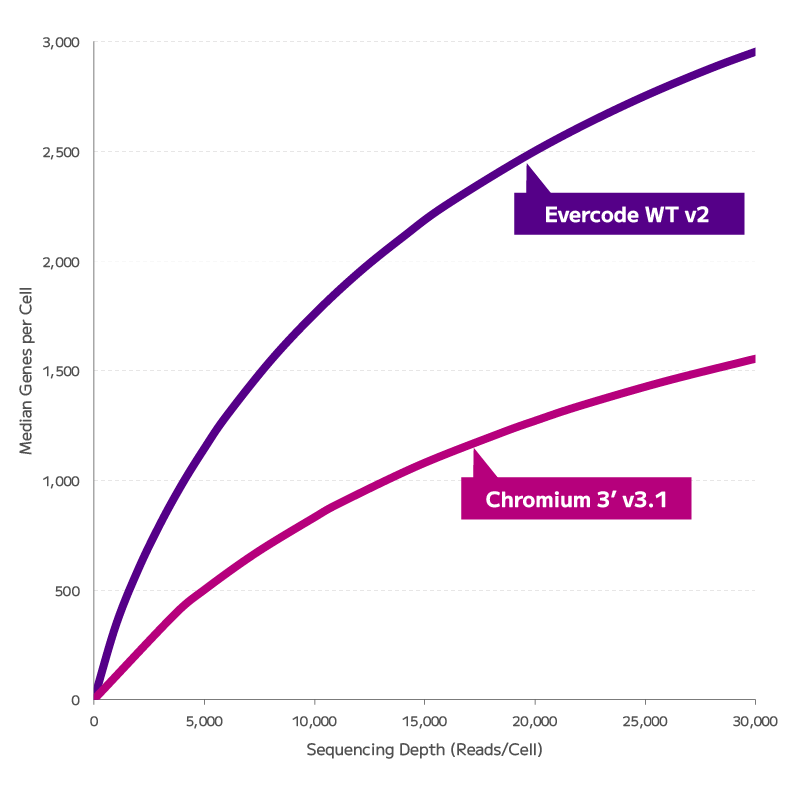
Single cell RNA sequencing has transformed how we interrogate complex tissues, immune repertoires, and disease biology — but for many labs, the barriers to entry and scale remain real. Instrument dependencies and low cell recovery have limited what’s practically achievable. Evercode™ Whole Transcriptome v4 addresses these constraints directly. Built on Parse Biosciences’ proven combinatorial barcoding chemistry, v4 enhances transcript and gene detection efficiency across sequencing depths, giving you sharper resolution of rare cell populations and lowly expressed genes without requiring specialised hardware.

What makes v4 a meaningful step forward is the combination of improved sensitivity with a redesigned, bead-based workflow. Centrifugation steps have been replaced with magnetic bead clean-up, resulting in up to 75% higher cell retention — a significant gain when working with limited or precious samples. Fewer pipetting steps, greater automation compatibility, and increased confidence at critical handling stages mean your experiments scale more reliably, whether you’re processing a handful of samples or running large cohort studies across conditions and replicates.
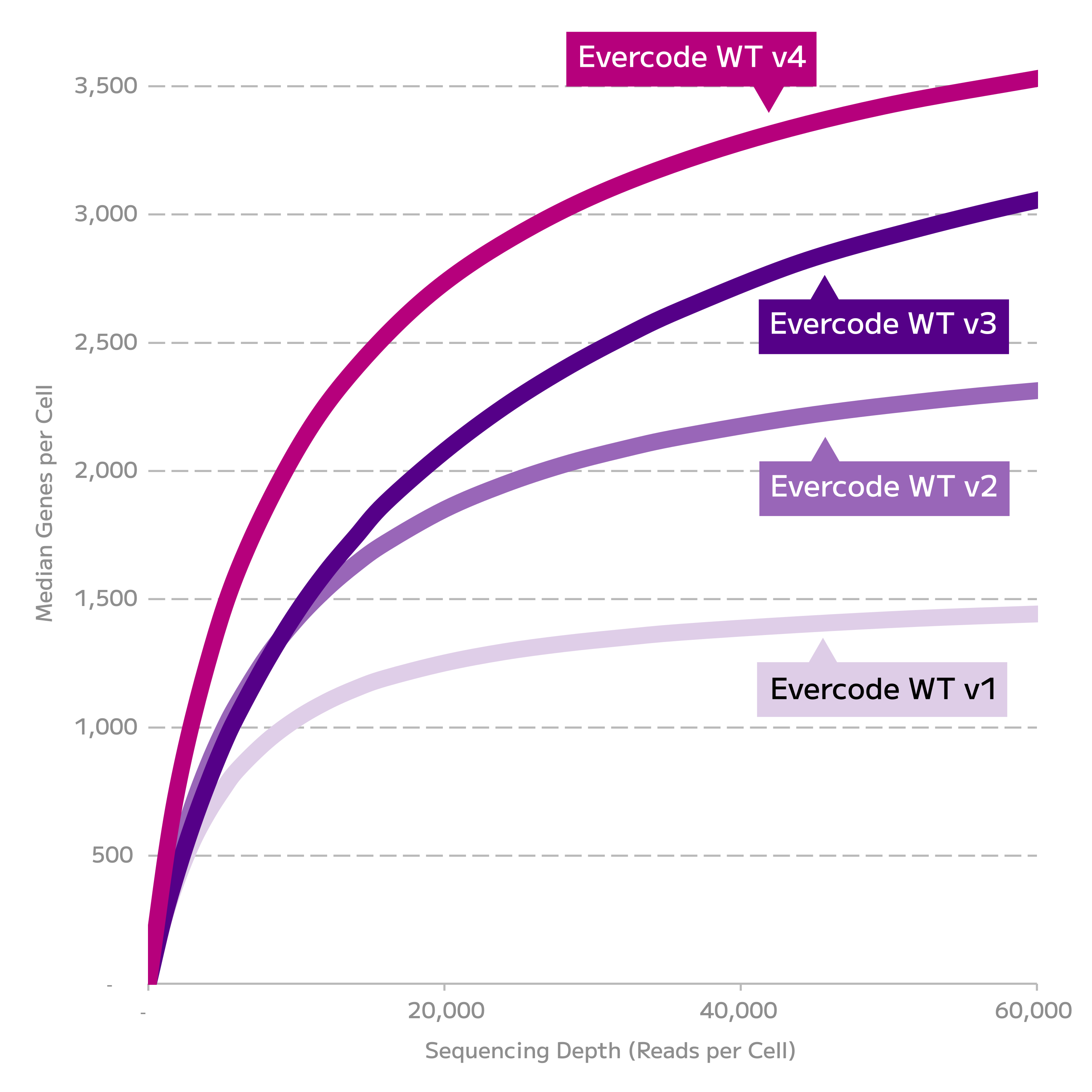
A History of Innovation. Now Even Greater Sensitivity.

Higher Sensitivity, Greater Biological Resolution

Improves transcript detection efficiency at every sequencing depth. Clearer identification of rare cell states and detection of genes.

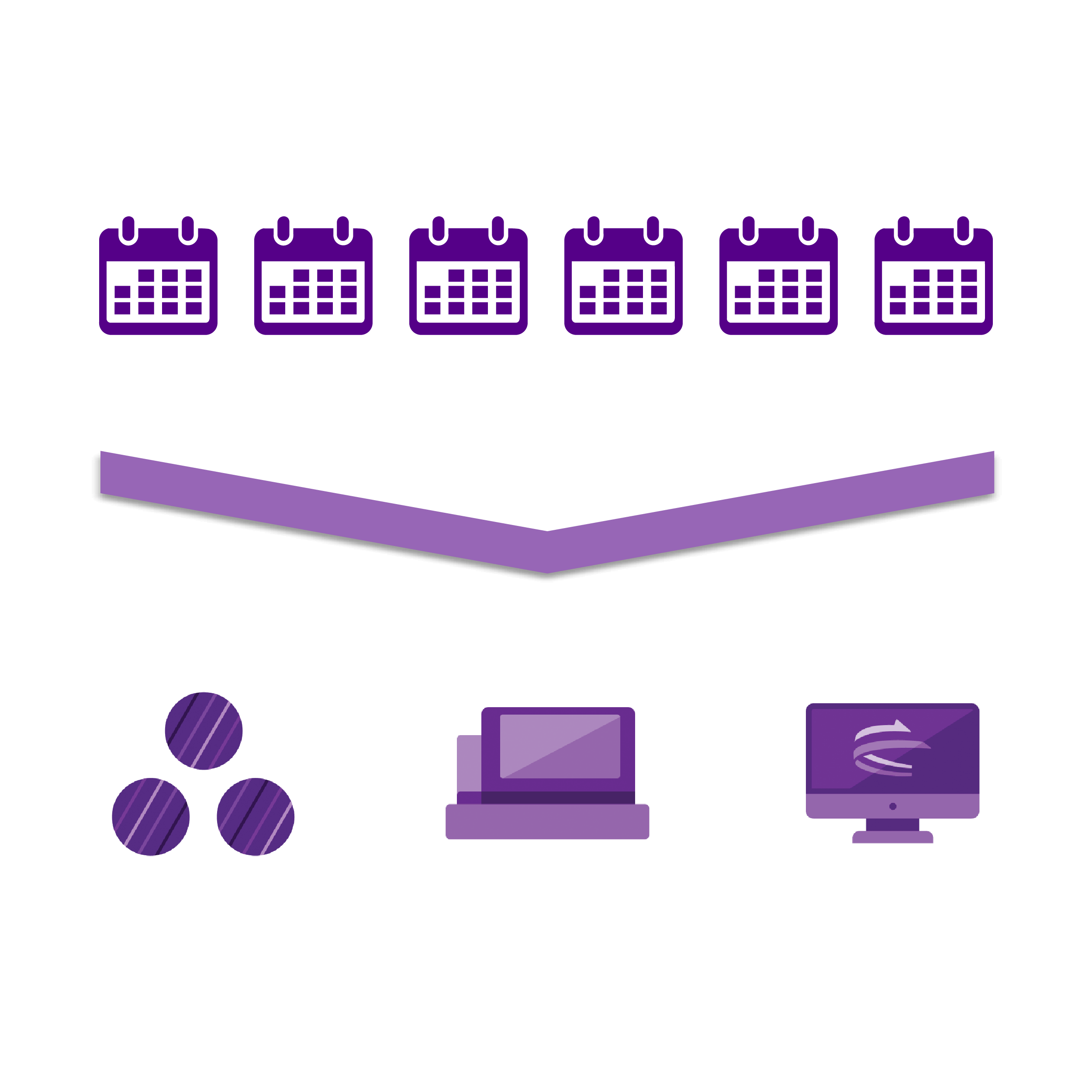
Instrument-Free Scalability

No capital equipment purchase.
No booking time on a shared instrument.
Single cell experiments start with a standard cell or nuclei suspension and a set of reagent plates — nothing more.

Bead-Based Workflow for Higher Cell Recovery

Retaining up to 75% more cells through critical clean-up steps.

Built for Automation and Reproducibility

Highly compatible with liquid handling systems, supporting consistent results across operators and sites.

Watch What the Leaders Have To Say

They talk about the problem they are trying to solve for a researcher, how has the feedback received from customers influenced the evolution of Evercode and more....

Ebru Boslem, PhD

ANZ Market Manager - Research Genomics

Our specialist team can advise on experimental design, sample preparation, and sequencing strategy — reach out to me directly and we can discuss your needs.

Why It Matters to You

1. For Immunology & Oncology Researchers

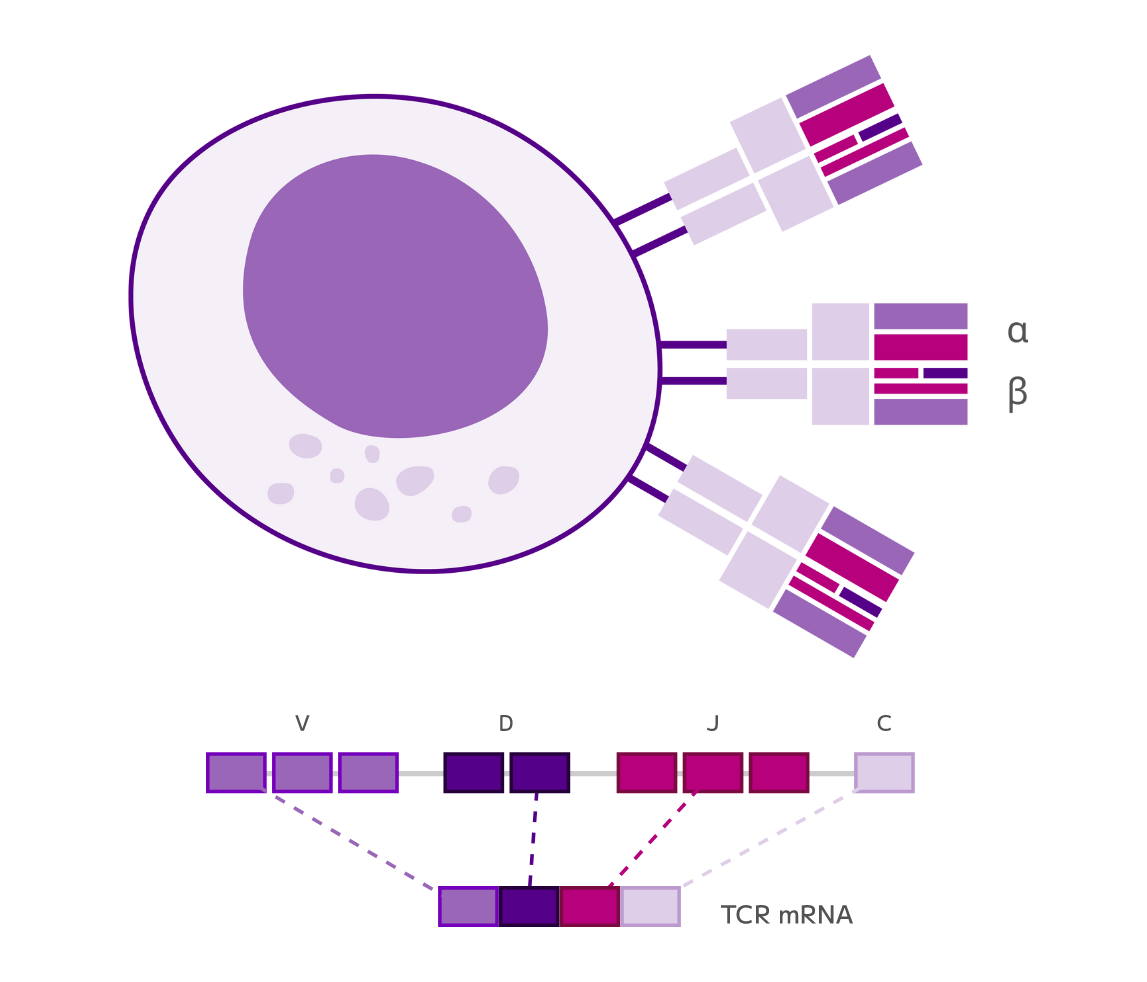
Pair whole transcriptome profiling with Evercode TCR or BCR kits to connect clonotype identity with transcriptional phenotype at single cell resolution.

2. For Oncology & Tumour Biology Labs

Higher gene detection per cell means better characterisation of malignant subpopulations, stromal interactions, and therapy-resistant states — even in samples with limited cell numbers from biopsies or PDX models.

3. For Cardiomyocyte and Complex Tissues Studies

Perfect for large cell types which may clog the microfluidic single cell instruments. Parse combinatorial barcoding occurs in plates inside fixed cell eliminating the need for cell suspension flow that can damage & stress cells.

4. For Core Facilities & Service Labs

v4's automation-ready workflow and consistent performance across operators reduce turnaround times and support diverse project demands without tying up instrument slots.

Explore Competitive Comparisons
Comparison 1: Evercode™ WT v4 vs. Chromium™ GEM-X Single Cell 3' v4 — Human PBMCs

When tested head-to-head using frozen PBMCs from two donors processed in independent labs, Evercode WT v4 demonstrated a clear increase in transcript detection compared to the Chromium GEM-X 3′ platform. Cell type proportions were equivalently represented across both technologies, confirming that Evercode’s combinatorial barcoding approach captures the same biological diversity — with the added advantage of lower ambient RNA contamination and a significant reduction in mitochondrial and ribosomal read content. For labs looking to maximise usable data per read, that’s sequencing budget going directly toward biology rather than noise.

Download Tech Note
Instantly!
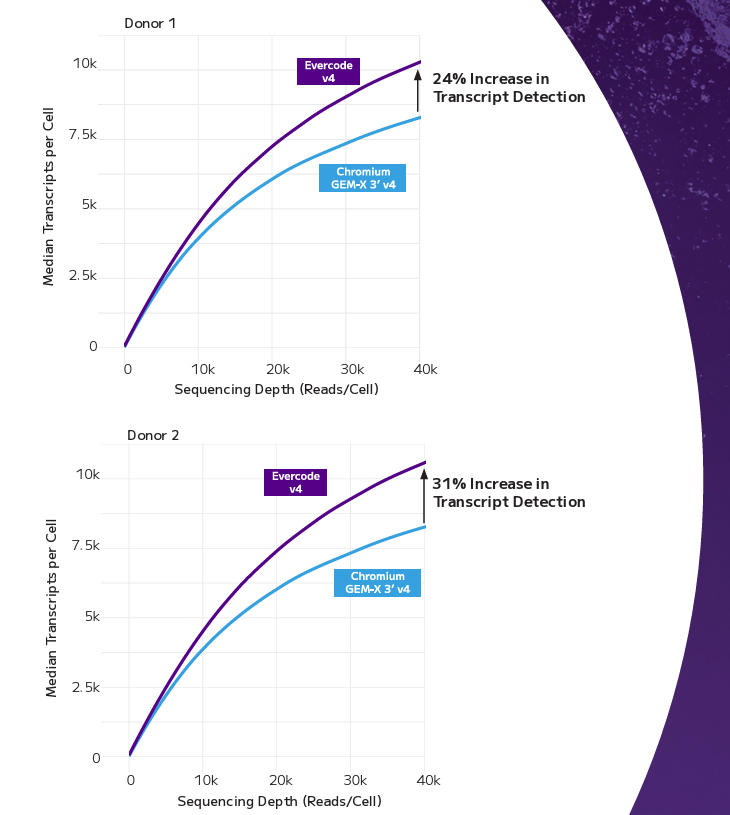
    Comparison of Evercode™ WT v4 and Chromium™ GEM-X Single Cell 3’ Kit v4 in Human PBMCs

    Gene Detection. Median genes detected per cell across different sequencing depths for PBMC donor 1 (top) and PBMC donor 2 (bottom). Aliquots derived from the same donor cryovial lot were distributed to separate laboratories for processing with either Evercode WT v4 or Chromium GEM-X 3’ v4 workflows and analyzed using their respective data analysis pipelines.

    Comparison 2: Evercode™ WT v4 vs. Chromium™ Flex v2 (Apex) — Fixed Human PBMCs

    In a parallel comparison using fixed PBMCs, Evercode WT v4 retained over four times the number of cells through processing and detected more than 60% higher median transcripts per cell — including diverse RNA biotypes that probe-based approaches can miss entirely. Because Evercode uses an RT-based method rather than predefined probe panels, you’re not limited to a curated gene list; you capture the full transcriptional landscape of each cell. For researchers working with fixed clinical samples or multi-site collections, this means more cells, more genes, and more confidence in what the data is telling you.

    Download Tech Note
    Instantly!
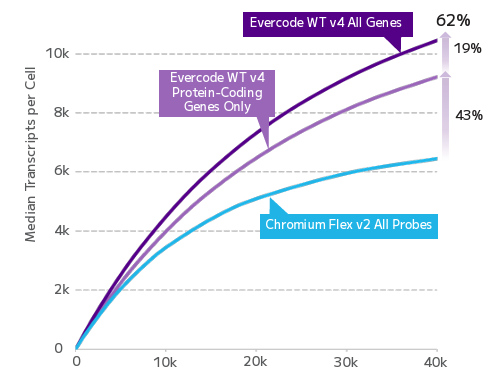
      Detected Transcripts and RNA Biotypes Comparison. Total transcripts detected in human PBMCs across sequencing depths, including protein-coding genes and other RNA biotypes. Other biotypes comprise lncRNA, miRNA, snRNA, snoRNA, miscRNA, pseudogenes, and Ig/TCR genes.
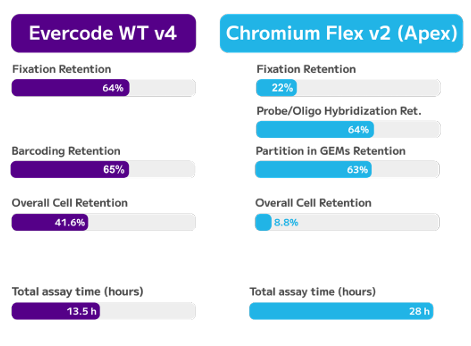
      Cell Retention & Assay Time. Overall retention rates were calculated by multiplying stepwise retention across all samples, and total assay times were based on vendor recommendations for four PBMC aliquots.
      Related Products

      Evercode™ Whole Transcriptome Range

      Evercode WT Mini — Ideal for pilot studies and labs getting started with single cell. Profile up to 10,000 cells per sample.

      Evercode WT — The standard configuration for most single cell transcriptomics experiments.

      Evercode WT Mega — Designed for larger experiments requiring higher cell throughput per run.

      Evercode WT Penta — Maximum scale for ambitious, multi-sample study designs.
      Immune Profiling

      Evercode TCR — Paired T cell receptor sequencing with whole transcriptome at single cell resolution.

      Evercode BCR — Paired B cell receptor sequencing with whole transcriptome at single cell resolution.
      Additional Capabilities

      Evercode Fixation — Fix samples at the point of collection and process later — ideal for clinical workflows and multi-site studies.

      Gene Select — Targeted gene panels to reduce sequencing costs while retaining biological insight.

      CRISPR Detect — Single cell readouts for pooled CRISPR screening experiments.

      Do you have a question?

      Our team is one form away.

      We only need below information to serve you better. Decode Science respects your privacy and will never spam you with unrelated content.




        BioinformaticsCloningCRISPREpigeneticsGenomicsLong ReadMetagenomicsMicrobiomeNeurologyProteinRNASingle CellSpatialSmall RNASynthetic BiologyOther

        You agree to receive communications from Decode Science. View our Privacy Policy

        NZ Morning & Afternoon Tea in March 2026

        NZ Morning & Afternoon Tea in March 2026

        Five cities. One week. BYO coffee and come grab a snack, talk genomics, and meet the team.

        Dates: 23–27 March 2026

        We’re bringing the Decode Science team to your doorstep, with morning and afternoon teas where you can chat with us about whatever’s on your bench or in your pipeline.

        Whether you’re working with CRISPR workflows, gene synthesis, spatial transcriptomics, single-cell, or variant interpretation — or something we haven’t even thought of yet — we’d love to hear about it.

        Daina, Jessie, and Chris will be covering ground from Dunedin to Auckland, stopping at universities and research institutes along the way. Come say hello, ask questions, share what you’re working on, or just grab a good coffee on us.

        Synthego logo

        CRISPR & gene editing (Synthego / Editco)

        Gene synthesis & cloning workflows (Twist Bioscience)

        STOmics White Background Logo

        Spatial transcriptomics / Single Cell (STOmics / Parse Biosciences)

        Biomarker Detection (Quanterix / Akoya)

        MGI

        Sequencing platforms (MGI)

        Functional cell analysis (Bruker Cellular Analysis)

        Bioptic

        Variant interpretation & clinical genomics

        …or anything else on your mind

        CLICK THE DATE BELOW TO REGISTER

        Monday 23 March — Christchurch

        On Site: Daina & Jessie

        Morning tea : University of Canterbury

        Tuesday 24 March — Nelson

        On Site: Daina & Jessie

        Afternoon tea : Plant and Food Research – Nelson

        Wednesday 25 March — Dunedin

        On Site: Daina, Jessie & Chris

        Morning tea : University of Otago — South Campus (Pathology)

        Afternoon tea : University of Otago — North Campus (Biochemistry)

        Thursday 26 March — Wellington

        On Site: Daina, Jessie & Chris

        Afternoon tea : Victoria University of Wellington

        Friday 27 March — Auckland

        On Site: Daina, Jessie & Chris

        Morning tea : University of Auckland — SBS (School of Biological Sciences) – Tea Room

        Parse Single Cell Grant – Apply Now

        Single Cell Grant - Apply Now

        Submission Deadline Passed:
        February 20 - 11:59 PM AEST

        Understanding single-cell biology at the whole-transcriptome level is critical for mechanistic insight in cancer and complex biology. Generating robust proof-of-concept data ahead of a grant cycle or biotech pitch can be the difference between progress and delay.

        Decode Science, in partnership with Parse Biosciences, is offering a Parse Single-Cell Grant to support researchers across Australia and New Zealand.

        What the Grant Supports

        Successful applicants will receive support to assay up to 100,000 single cells across 12 samples, including sequencing.

        Parse Biosciences’ Evercode™ technology enables scalable single‑cell RNA sequencing with high transcript capture—without specialised hardware—making it suitable for both new and established single‑cell labs.

        What's Included

        1. Parse Evercode™ WT single‑cell kit (up to 100,000 cells) & one cell or nuclei fixation kit for up to 12 samples

        2. Sequencing included

          1. 20,000 reads per cell

          2. Sequencing costs covered by Decode Science and SAGC

        3. Application and experimental feasibility review by Parse Application Support

        Application Requirements

        Applicants must submit an abstract (maximum 300 words) outlining:

        1. Experimental objectives

        2. Sample type and number

        3. Expected cell count per sample

        4. Plans for scale‑up and projected throughput

        Key Dates

        1. Abstract submission deadline: 20 February 2026

        2. Internal application review: 20 February – 6 March 2026

        3. Winner + 5 consolation prizes announced: 9 March 2026

        4. Orders to be placed by: 25 March 2026

        5. Kit delivery completed by: 10 June 2026

        Ebru Boslem

        ANZ Market Manager

        If you have questions or would like guidance on suitability or the application process, please reach out to me directly.

        Parse Single Cell Grant Application – Information Session

        Single Cell Grant Application - Information Session

        Join this webinar to learn about the Parse Biosciences Single-Cell Grant and how researchers can access Evercode™ single-cell technology.

        This session is designed for researchers who are new to Parse Biosciences and are interested in applying for the grant.

        What we’ll cover:

        1. Overview of modern single-cell sequencing approaches

        2. Details of the Parse Biosciences grant program

        3. Eligibility and evaluation criteria

        4. What makes a strong grant application

        Attendance is strongly recommended for anyone planning to apply, as the session will include important guidance and updates related to the application process. A recording will be available for registered participants.

        Registration is free.

        Smash the limits of single cell sequencing with Parse

        Smash the limits of single cell genomics.

        Join us to learn about Parse’s single cell whole transcriptome technology and recently launched Evercode V3 Kits. More cells, more samples, more clarity.

        Combinatorial barcoding technology strips away the limitations and frustrations of yesterday’s single cell approach. It ditches the specialized instrument, freeing you to pursue unprecedented discoveries. Unleash the potential of single cell. Decode Science and Parse Biosciences invite you to a seminar discussing the advances in fixation-based single cell transcriptomics including our V3 chemistry, TCR/BCR kits, CRISPR Detect and Gene Capture.


        MEET THE SPEAKER

        John received his PhD at Duke University, where he studied cis-regulatory element activation during limb regeneration. He then spent a few years as a postdoc at the University of California, Merced where he studied early organ formation using single-cell genetic and epigenetic approaches. As a Field Application Scientist at Parse Biosciences, John assists scientists with their single-cell genomics experiments, from experimental design, sample preparation, single-cell library workflows, data analysis, and more.

        John’s favorite model organism are zebrafish, both embryos and adults. In his free time John enjoys eating spicy food, and dabbles in growing his own hot chili pepper plants.

        Brisbane

        Date: 8th September 2025

        Seminar : 11:30 AM – 12:30 PM – Translational Research Institute Room 3000

        Sydney - DAY 1

        SEMINAR 1

        Date: 9th September 2025

        Time: 10 AM – 11 AM

        Location:Westmead Institute of Medical Research (hosted by Genomics Core) L2 WIMR: Meeting room C.2.31


        SEMINAR 2

        Date: 9th September 2025

        Time: 2 PM – 3 PM

        Location: UNSW (hosted by Ramaciotti) – AGSM Theatre

        Sydney - DAY 2

        SEMINAR 1

        Date: 10th September 2025

        Time: 9:30 AM – 10:30 AM

        Location: VCCRI (Victor Chang Cardiac Research Institute) (hosted by Innovation Centre), Level 4 Boardroom

        SEMINAR 2

        Date: 10th September 2025

        Time: 12:00 PM – 1 PM

        Location: Garvan Institute (hosted by Single Cell Platform) – John Shine Room, Garvan Institute of Medical Research

        Canberra

        Date: 11th September 2025

        Time: 1:00 – 2:00 PM

        Location: JCSMR, ANU Seminar Rooms 1+2

        Melbourne

        SEMINAR 1

        Date: 12th September 2025

        Time: 11:00 AM – 12:30 PM

        Location: WEHI – Genomics Seminar series, Level 7 seminar room

        Adelaide

        SEMINAR 1

        Date: 16th September 2025

        Time: 10:00 AM – 11:00 AM

        Location: Flinders University Health and Medical Research Building (HMRB)

        SEMINAR 2

        Date: 16th September 2025

        Time: 12:30 PM – 02:00 PM

        Location: SAHMRI (South Australian Health and Medical Research Institute)