

CanHelp Genomics is a precision oncology molecular diagnostics company specialising in tumour mRNA diagnostics — combining high-throughput gene expression profiling with advanced AI algorithms to address two of the most diagnostically challenging problems in oncology.
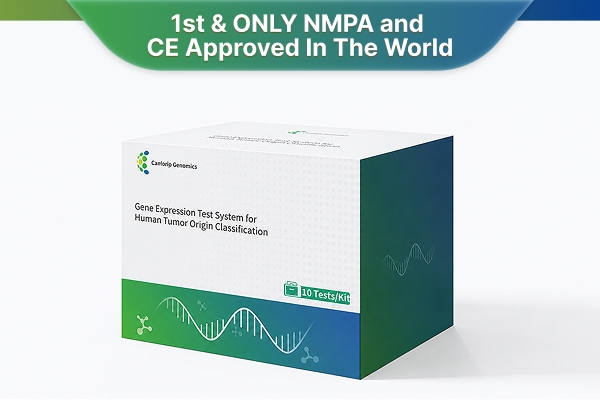
Their flagship assay, CanHelp-Origin, is the world’s first and only tumour origin classification test approved by both China’s National Medical Products Administration (NMPA) and CE-marked in Europe. It uses a 90-gene RT-qPCR expression panel to classify tumour tissue into one of 21 common tumour types, providing molecular evidence for tissue-of-origin in cases where conventional diagnostics — immunohistochemistry, imaging, and clinical evaluation — have failed to identify the primary site. CanHelp-UCa provides non-invasive molecular detection and recurrence surveillance of urothelial carcinoma from a urine sample, using an eight-gene RNA signature without the need for cystoscopy.
Both assays run on established laboratory RT-qPCR platforms making them accessible for implementation in molecular pathology laboratories without requiring dedicated capital equipment. They are designed for decentralised use, supporting testing closer to the patient and enabling faster turnaround. As authorised Australian and New Zealand distributors for CanHelp Genomics, Decode Science can advise on assay implementation, research & development, and instrument compatibility for your laboratory. Please note: CanHelp-Origin and CanHelp-UCa are currently available for Research Use Only in Australia and New Zealand. We can help develop into IVD testing assays for clinical diagnostic use in ANZ , and TGA approval application in progress.
Clinically Validated – Phase III Trial Published in The Lancet Oncology
90-Gene Tumour Origin Classification Across 21 Tumour Types
Non-Invasive Urothelial Carcinoma Detection From Urine
Compatible With Standard Laboratory RT-qPCR Infrastructure
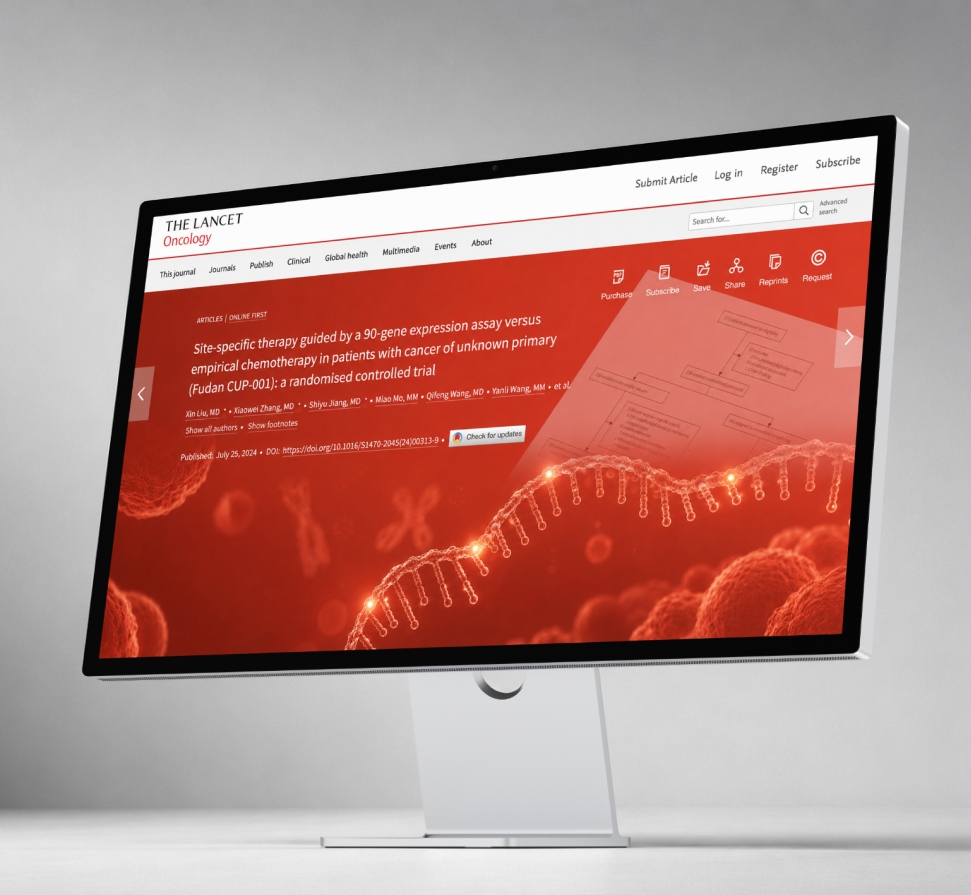
The FUDAN-CUP001 trial is the world’s first randomised Phase III study demonstrating that site-specific therapy guided by CanHelp-Origin significantly improves outcomes in cancer of unknown primary (CUP) patients. In 182 randomised patients, site-specific therapy guided by CanHelp-Origin delivered a median progression-free survival of 9.6 months versus 6.6 months with empirical chemotherapy — a 32% reduction in risk of disease progression. This is the highest level of clinical evidence yet produced for any tumour origin classification assay, and positions CanHelp-Origin as a reference-level tool for CUP research.
CanHelp-Origin measures the expression of 90 carefully selected genes from FFPE tumour tissue using RT-qPCR, generating similarity scores against a reference database of 5,434 specimens spanning 21 tumour types. A support vector machine algorithm produces ranked probability scores for each tumour type, identifying the most probable tissue of origin with an overall accuracy exceeding 89–94% across two large multicentre validation cohorts. In a prospective study of 303 cases across standard care pathways, the assay successfully identified a molecular tumour type in 97.4% of cases — providing actionable classification where conventional diagnostics had reached their limits.

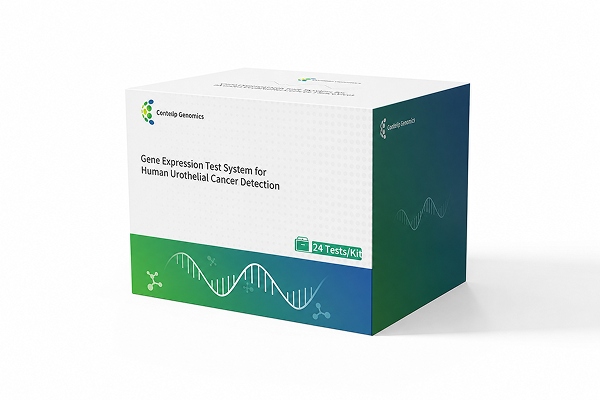
CanHelp-UCa analyses an eight-gene RNA signature from a urine sample to deliver molecular detection and recurrence monitoring of urothelial carcinoma of the bladder and upper urinary tract — without cystoscopy. Urothelial carcinoma has one of the highest recurrence rates of any cancer, placing a significant surveillance burden on patients who would otherwise require repeated invasive procedures. CanHelp-UCa provides a complementary, non-invasive approach for early detection in symptomatic patients and ongoing disease monitoring, reducing diagnostic uncertainty and supporting timely clinical decision-making in research settings.

Both assays run on RT-qPCR platforms already present in most molecular pathology and research laboratories. No dedicated capital equipment is required. The FFPE RNA isolation, cDNA synthesis, and RT-qPCR workflow is compatible with standard laboratory protocols, and CanHelp Genomics provides matched reagent kits for RNA extraction from FFPE tissue. Designed for decentralised use, with straightforward implementation and fast turnaround.

Business Development Manager
Researching CUP, urothelial carcinoma, or tumour origin classification in your laboratory?
Our team can advise on assay implementation, instrument compatibility, and research study design.
Cancer of unknown primary and diagnostically challenging metastatic cancers represent a significant unmet need in oncology research — and the tools to address them are only now reaching the quality threshold needed to make a measurable difference in patient outcomes. CanHelp-Origin and CanHelp-UCa are most relevant for:
Evaluate the performance of 90-gene expression profiling in your patient cohort. The assay has been validated across 21 tumour types with accuracy exceeding 89% in multicentre studies. Research laboratories investigating CUP biology, treatment stratification, or diagnostic algorithm development will find CanHelp-Origin a technically rigorous and clinically grounded starting point.
IHC-to-molecular concordance for tumour origin classification has been reported at 88.3% in published cohorts. Research programmes investigating the complementary value of molecular gene expression profiling alongside standard IHC panels can use CanHelp-Origin to assess additive diagnostic value.
Bladder cancer’s high recurrence rate makes surveillance methodology a critical research question. CanHelp-UCa’s non-invasive urine-based RNA signature provides a research tool for evaluating molecular recurrence detection versus standard cystoscopy protocols.
The 90-gene panel’s SVM-based similarity scoring generates a molecular profile that extends beyond binary classification, providing richly quantitative gene expression data for downstream biomarker investigation.

Ultrasensitive protein biomarker detection from serum and plasma; complements molecular tumour classification with circulating protein biomarker profiling in oncology research

Multiplex spatial proteomics for tumour tissue sections; pairs with CanHelp-Origin for combined molecular and spatial characterisation of FFPE tumour material

Comprehensive genomic profiling for somatic variant detection; pairs with CanHelp-Origin for combined mutation and expression-based tumour characterisation
CUP is defined as pathologically confirmed metastatic cancer where the primary tumour site cannot be identified despite comprehensive clinical evaluation, imaging, and IHC workup. It accounts for 2–5% of all malignancies and carries a median overall survival of less than one year with empirical chemotherapy. The inability to identify the primary site means site-specific targeted therapies — which may meaningfully improve outcomes — cannot be applied without additional molecular evidence.
CanHelp-Origin extracts total RNA from FFPE tumour tissue and measures the expression of 90 carefully selected genes using RT-qPCR. A support vector machine algorithm compares the resulting expression profile against a reference database of 5,434 specimens spanning 21 tumour types, generating ranked similarity scores that identify the most probable tissue of origin.
In two large multicentre validation cohorts, CanHelp-Origin demonstrated overall accuracies of 89.8% (547/609) and 94.4% (1,338/1,417) across 21 tumour types. In a prospective standard-of-care study of 303 cases, the assay returned a predictable result in 97.4% of cases.
Yes. The FUDAN-CUP001 Phase III randomised trial published in The Lancet Oncology (2024) demonstrated that site-specific therapy guided by CanHelp-Origin improved progression-free survival to 9.6 months versus 6.6 months with empirical chemotherapy — a statistically significant 32% reduction in risk of disease progression across 182 randomised CUP patients.
No. CanHelp-Origin is not TGA-approved and is currently available for Research Use Only in Australia and New Zealand. It may not be used to guide clinical diagnostic or treatment decisions in ANZ. Researchers interested in building evidence toward TGA registration are encouraged to contact Decode Science.
CanHelp-UCa is a non-invasive molecular assay that detects urothelial carcinoma from a urine sample using an eight-gene RNA signature. Unlike cystoscopy, it requires no invasive procedure. It is designed for use in symptomatic patients and recurrence surveillance settings. In ANZ, CanHelp-UCa is available for Research Use Only.
Both assays have been validated for use on the QuantStudio 5 Dx Real-Time PCR system and the Applied Biosystems 7500 Real-Time PCR system. Contact Decode Science to discuss compatibility with other RT-qPCR instruments in your laboratory.
Freshly cut unstained FFPE sections of 5–15 micrometres are required. H&E review by a pathologist to confirm tumour cell content and mark regions for macrodissection is recommended prior to RNA extraction. Specific guidance on minimum tumour cell percentage and necrotic area thresholds is available from Decode Science on request.
Yes. CanHelp-UCa is designed for detection and surveillance of urothelial carcinoma of both the bladder and upper urinary tract from urine samples.
We only need these information to serve you better. Decode Science respects your privacy and will never spam you with unrelated content.

Simply add your details below and get quick access to the brochure.
Simply add your details below and get quick access to the brochure.
Simply add your details below and get quick access to the brochure.