


From DNA to Sequence-Ready Libraries in 100 Minutes — Built for Agricultural Genomics at Scale

Download Instant Resources

View Product Comparison Chart

seqWell AgriPrep™ Library Prep Kit

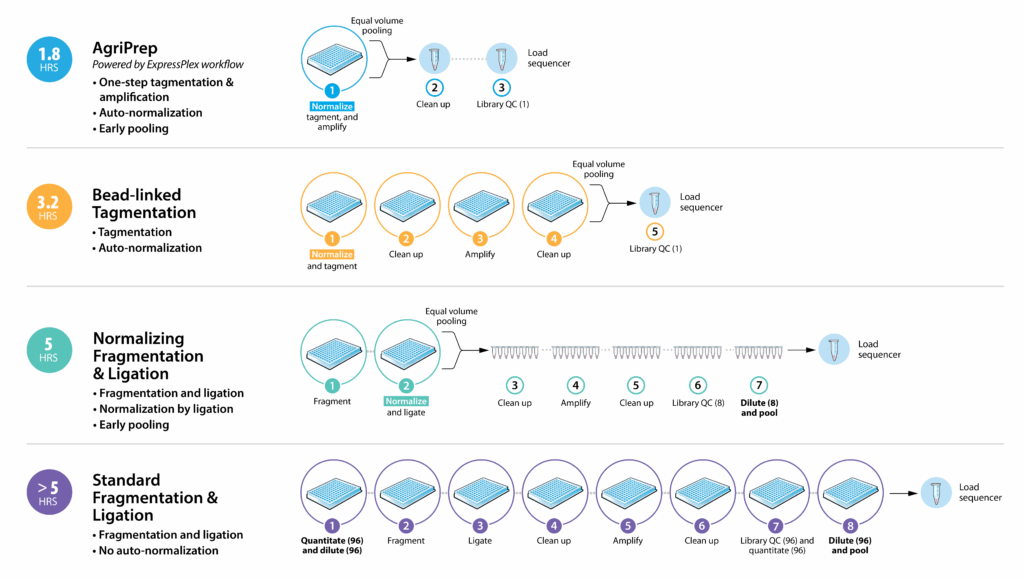
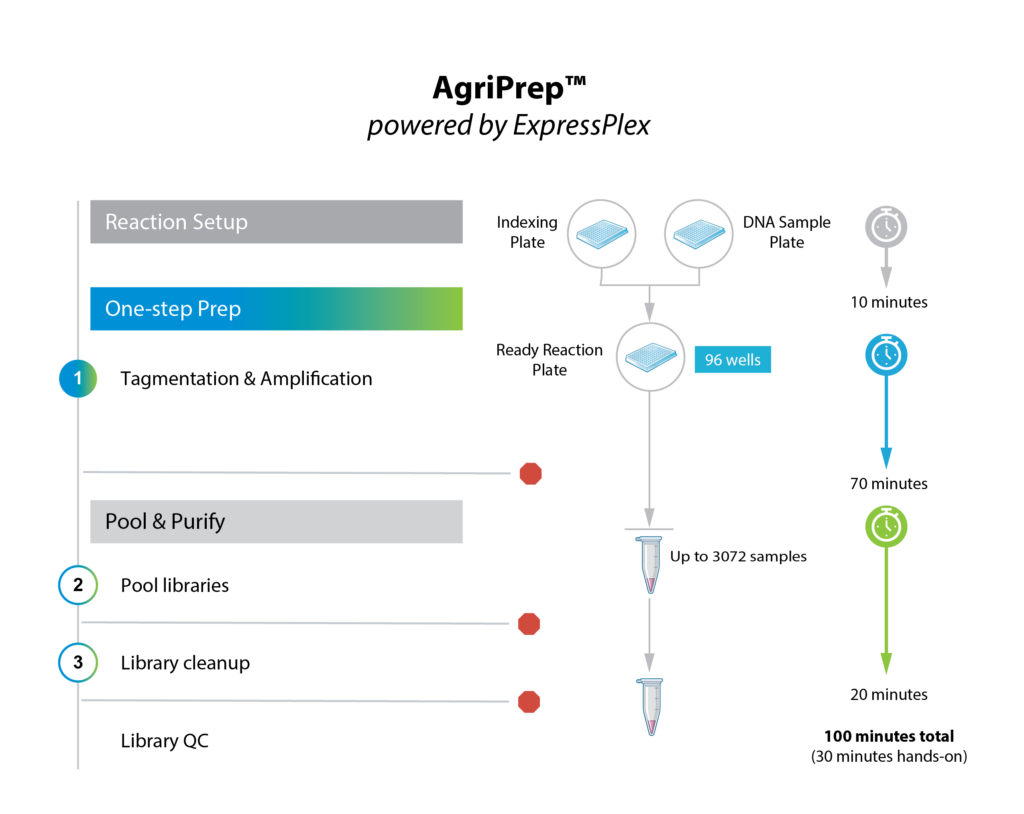
The seqWell AgriPrep™ Library Prep Kit is a purpose-built NGS library preparation solution for plant, animal, and human low-pass whole genome sequencing and SKIM-sequencing workflows — designed from the ground up for the throughput, simplicity, and cost efficiency that population-scale agrigenomics demands. Powered by seqWell’s one-step ExpressPlex workflow, AgriPrep combines tagmentation and amplification into a single step, with built-in auto-normalisation and early sample pooling, taking you from extracted genomic DNA to sequence-ready libraries in just 100 minutes with only 30 minutes of hands-on time. It is the simplest library prep workflow on the market for its scale — and the numbers back that claim.

AgriPrep supports up to 3,072 unique index combinations, is available in 96-well and bulk reagent formats, and is compatible with 384-well and Echo-compatible plate formats for ultra-high-throughput operations. Its auto-normalisation of both mean insert size and read depth eliminates the need to individually quantify and dilute samples before pooling — reducing labour, reducing consumable use by up to 95%, and reducing sequencing costs by removing the need to over-sequence to bring your lowest-coverage samples up to target depth. As your authorised Australian and New Zealand distributor for seqWell, Decode Science can advise on kit format selection, throughput optimisation, and compatibility with your sequencing platform.

Harvest actionable insights using simple, scalable, cost-effective sequence exploration

One-Step Workflow — 100 Minutes, 30 Hands-On

Tagmentation and amplification are combined into a single reaction step, followed by auto-normalisation and early pooling. The result is the most streamlined library prep workflow available for low-pass WGS at scale — no polymerase, primers, or barcodes to source separately, all are included in the supplied ready reaction mix. At 100 minutes total and 30 minutes hands-on, AgriPrep removes library prep as a bottleneck for high-throughput genomics programmes.

Auto-Normalisation Eliminates Individual Sample Quantification

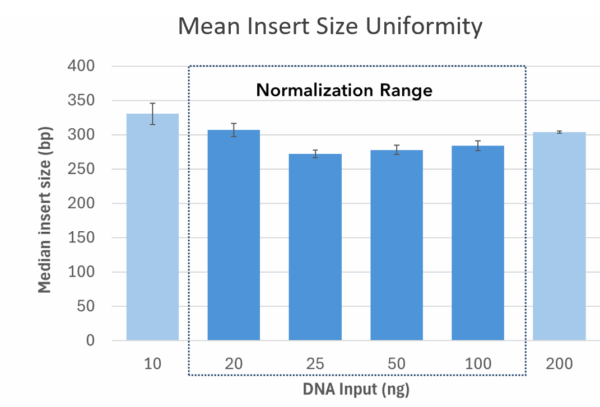
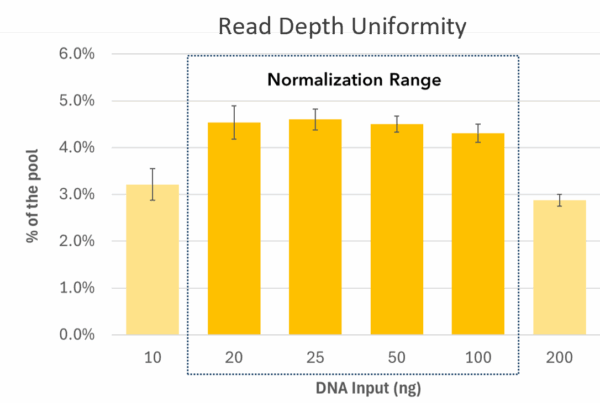
AgriPrep's auto-normalisation of mean insert size and read depth across a 20–100 ng input range removes the need to individually quantify and dilute samples before pooling. Across a 24-plex barley gDNA library pool (10–200 ng input), mean insert size CV was 6.9% and read depth CV was 10.5% within the normalisation range — delivering the coverage consistency needed to hit per-sample read depth targets without over-sequencing.

Up to 95% Fewer Consumables and Dramatically Lower Sequencing Costs

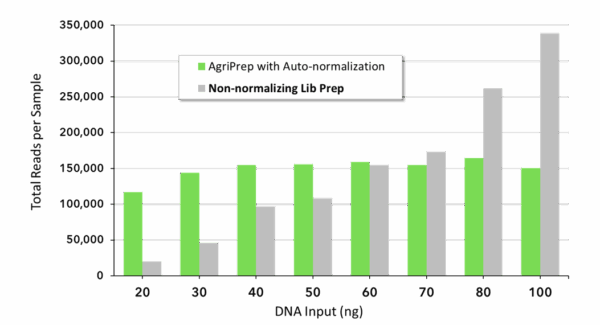
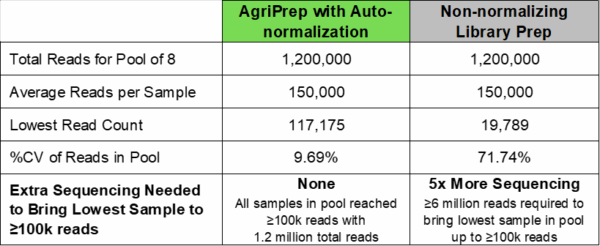
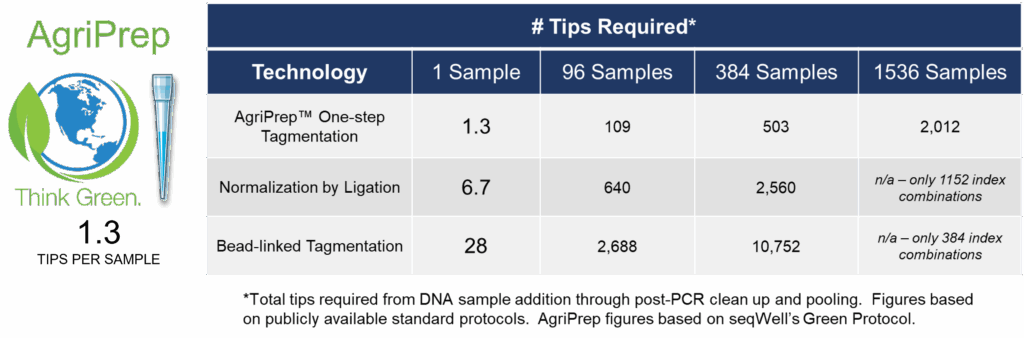
Pre-plated reagents, single-step chemistry, early pooling, and sequential reagent addition combine to use fewer than two pipette tips per sample — reducing consumable costs by up to 95% versus standard library prep approaches. Auto-normalisation of read depth further reduces sequencing costs by minimising coverage variance between samples: in a head-to-head comparison, AgriPrep required 5× less sequencing than a non-normalising prep to bring all samples to ≥100,000 reads from a pool with variable DNA inputs.

Scalable to 3,072 Indexes Across 384-Well and Echo-Compatible Formats

Up to 1,536 unique index combinations are available off-the-shelf, with up to 3,072 available via custom ordering. AgriPrep is automation-friendly and compatible with 384-well plate and Echo-compatible plate formats for ultra-high-throughput operations — making it practical for population genomics, genomic selection programmes, and large-scale agrigenomics studies where per-sample cost and throughput are the primary operational constraints.

Chris Wicky

Clinical Sales Manager - ANZ Country Manager - NZ
Running low-pass WGS or SKIM-sequencing at scale and want to know if AgriPrep fits?
Our team can help you assess throughput requirements, index combinations, and format compatibility for your programme.

Product Data: Performance at Scale

Auto-Normalisation Delivers Consistent Coverage Across Variable Inputs

A 24-plex library pool prepared from 10–200 ng barley gDNA and sequenced on an Illumina MiSeq i100 demonstrated consistent performance across the full working range. Within the 20–100 ng normalisation range, mean insert size CV was 6.9% and read depth CV was 10.5% — confirming that AgriPrep’s auto-normalisation reliably equalises coverage across samples with variable starting inputs.

80% Reduction in Required Sequencing Versus Non-Normalising Methods

In a direct comparison using 8 samples with variable DNA inputs (20–100 ng), AgriPrep with auto-normalisation achieved ≥100,000 reads per sample in a pool sequenced to 1.2 million reads. The non-normalising comparator required 6 million reads — 5× more sequencing — to bring the lowest-represented sample to the same threshold. For large-scale programmes, this difference in sequencing cost is substantial.

Fewer Than 2 Tips Per Sample

Pre-plated reagents and sequential reagent addition reduce consumable use to fewer than 2 pipette tips per sample — a reduction of up to 95% versus standard library prep workflows. At population scale, this translates directly to lower per-sample reagent cost, reduced waste, and faster processing.

Chris Wicky

Clinical Sales Manager - ANZ Country Manager - NZ
Ready to simplify your agrigenomics library prep workflow?


Request a quote or ask about bulk format pricing — our team will respond within one business day.

Why It Matters to You?

Because Population-Scale Genomics Programmes Live or Die on Per-Sample Cost

Low-coverage whole genome sequencing is transforming agrigenomics — enabling genomic selection, genotype-by-sequencing, and population-scale variant discovery at costs that make large cohort studies feasible. But the library prep step has remained a persistent bottleneck: labour-intensive, consumable-heavy, and prone to coverage variance between samples that forces over-sequencing to compensate.

AgriPrep is designed specifically to remove this constraint. It is most relevant for:

Genomic selection and breeding programmes

Large populations of plant or animal samples need to be processed consistently, affordably, and at throughput that matches breeding cycle timelines. AgriPrep’s 100-minute protocol, auto-normalisation, and 3,072-index capacity support exactly this.

Aquaculture and livestock genomics

Validated for high-throughput low-pass WGS in aquaculture applications. AgriPrep’s scalability and simplified workflow make it practical for fisheries and livestock genomics programmes processing hundreds to thousands of samples per run.

Plant genomics and crop science

Validated across plant gDNA inputs including barley, with performance benchmarked against fragmentation-ligation workflows for genomic selection using lpWGS.

Core laboratories and high-throughput sequencing facilities

384-well and Echo-compatible plate format support, automation compatibility, and bulk reagent availability make AgriPrep a practical choice for facilities processing large sample volumes across multiple projects.

AgriPrep Specifications

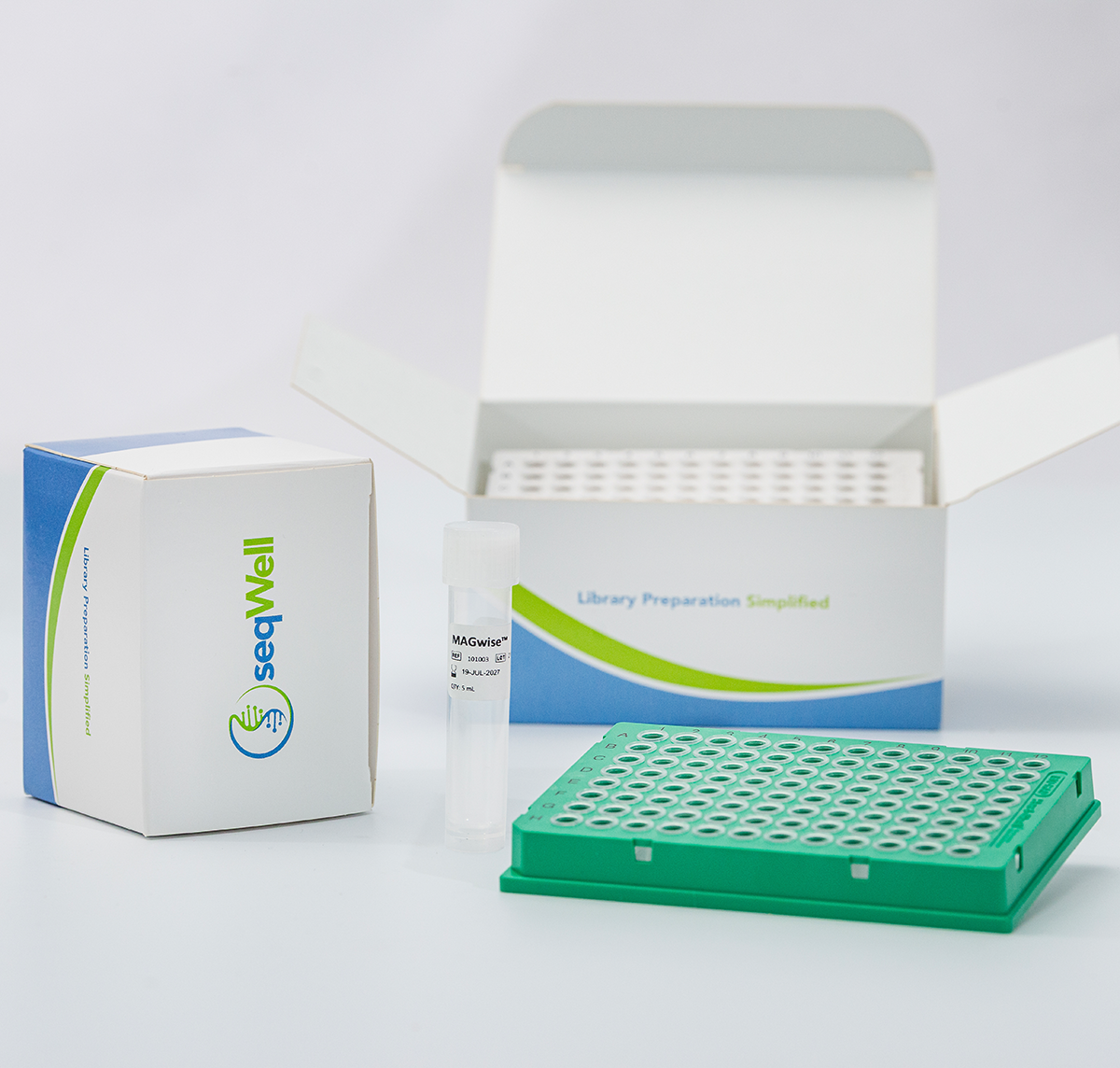
AgriPrep Library Prep Kit Includes

Indexing Reaction Plate(s)
Ready Reaction Mix Plate(s)
MAGwise Paramagnetic Beads
PhiRx Indexed Control

Users do not need to supply polymerase, primers, or barcodes. These are contained within the supplied ready reaction mix.

Primary ApplicationsGenotyping-by-sequencing (GBS), Low pass sequencing, SKIM-seq
Sample Input typesPlant, animal, and human genomic DNA
TransposaseTnX – Next generation engineered transposase
Kit format
  • 96-well
  • Custom dispense
DNA Input

Working range: 10-200 ng

Normalization range: 20-100 ng

Total Library Prep Time100 minutes (30 minutes hands-on time)
Indexing MethodCombinatorial Dual Indexing
Number of Unique Index CombinationsUp to 1536 (off-the-shelf); up to 3072 via custom ordering
Batch Size8-96 samples; bulk reagents support 384-well & Echo-compatible plate formats


Related Products

Recover More Data From Your Sequencing

PhiRx Indexed Control NOW included with every AgriPrep Library Prep Kit

Instrument-free and multiplexing up to 96 samples per run

seqWell MosaiX™ Library Prep Kit

Low-input and single-cell library prep kit for diverse sample types

MGI DNBSEQ Sequencing Platforms

High-throughput sequencing platforms; compatible with seqWell library prep kits

FAQs

AgriPrep is purpose-built for low-coverage whole genome sequencing of plant and animal genomes — including genotyping-by-sequencing (GBS), SKIM-sequencing, and genomic selection programmes. It has not been validated for RNA-seq. Contact Decode Science if you’re considering it for other applications requiring ≤50M clusters, such as microbial WGS.

The working range is 10–200 ng (2.5–50 ng/µl), using 4 µl of purified DNA per reaction. Auto-normalisation performs optimally within the 20–100 ng range (5–25 ng/µl). Inputs below 2.5 ng/µl are not recommended due to increased risk of failure. If your samples are all above 50 ng/µl, dilute to an average of approximately 10 ng/µl before processing.

No — this is one of AgriPrep’s key advantages. The kit is formulated to tolerate up to a 20-fold difference in sample input (10–200 ng), so individual sample quantification and dilution before pooling is not required. Fluorometric methods such as Qubit or PicoGreen are recommended if quantification is needed.

Yes. AgriPrep includes all indexed adapters, amplification master mix, and amplification primers needed to produce dual-indexed, Illumina-compatible libraries. No separate polymerase, primers, or barcodes are required.

The standard 96-well kit supports 16–96 samples per plate. Up to 1,536 unique index combinations are available off-the-shelf; up to 3,072 via custom ordering. Bulk reagent formats support 384-well and Echo-compatible plate operations for ultra-high-throughput workflows.

Yes — provided no DNA or indexing reagents have been added and no incubations have been run. Use a razor blade to cut the plate seal up to the number of wells being processed, peel only those wells, proceed with the protocol, then cover used wells and store remaining reagents at −20°C for future use.

Yes. AgriPrep is well-suited to automated liquid handling platforms. Note that plate seals are not pierceable — they must be peeled back before automated access. Contact Decode Science for guidance on validated automation methods and available automation guides.

Typically 300–2,000 bp, depending on sample input. If input DNA is shorter than 1,000 bp, the resulting library size distribution will reflect this. Fragments above 1,200 bp do not affect clustering or data quality, but should be accounted for in library quantification — use region analysis on a TapeStation or Fragment Analyser to determine the proportion of sequenceable fragments before calculating loading concentration.

PhiRx is included with every AgriPrep kit and is strongly recommended. While AgriPrep libraries have highly diverse base composition and don’t strictly require PhiRx for read diversity, a 1–2% spike-in provides a useful internal sequencing control. If sequencing on XLEAP-SBS chemistry or fewer than four plates simultaneously, a 5–10% spike-in is advised to support colour balancing.

AgriPrep libraries are compatible with Illumina iSeq, MiSeq, MiniSeq, NextSeq, HiSeq, and NovaSeq systems, using the same sequencing primers as Nextera® libraries. Note that TruSeq v3 Cluster kit primers are incompatible — the TruSeq Dual Index Sequencing Primer Box is required for older Illumina systems. Many users have also successfully used conversion kits for non-Illumina platforms.

Talk to Us About AgriPrep

We only need these information to serve you better. Decode Science respects your privacy and will never spam you with unrelated content.


    Antibody EngineeringAquacultureCardiovascularCore FacilityCROsCytogeneticsDrug DiscoveryEarly stage biotechEnzyme EngineeringFood SafetyGermlineHorticulture (plant)ImmunologyInfectious DiseaseLivestockmRNA/RNANeuropathologiesNeuroscienceOncologyOncology Pre ClinicalPhysiologyProtein EngineeringRare DiseaseSoil and EnviromentalStructural BiologySynthetic BiologyTherapeuticsOther

    You agree to receive communications from Decode Science. View our Privacy Policy

    Instant Download

    Simply add your details below and get quick access to the brochure.

      You agree to receive communications from Decode Science.View Our Privacy Policy.

      Instant Download

      Simply add your details below and get quick access to the brochure.

        You agree to receive communications from Decode Science.View Our Privacy Policy.

        Instant Download

        Simply add your details below and get quick access to the brochure.

          You agree to receive communications from Decode Science.View Our Privacy Policy.

          Special October Offer

          FREE UMBRELLA